
Brookhaven Previous Residents by Era
Walking an address backward in Brookhaven means leaning on records that answer very different questions. Town tax and assessment rolls pin down the parcel. The Suffolk County Clerk holds the title route through recorded deeds. From there, city directory volumes, census schedules, newspapers, cemetery files, and local archives help test which households belonged to a place. Each source covers its own span of years. A name on a deed marks an ownership transaction. It is never automatic proof that the person slept at that address.
| Source | Years it covers | Where held | What it can show |
|---|---|---|---|
| County Clerk online land index and images | 1987-present | Suffolk County Clerk kiosk | Recorded instruments, names, dates, Liber/Page, and prior references |
| Public land-record terminals | 1969 forward | County Clerk historical research route, Riverhead | Older title research beyond the stated online span |
| Grantor and grantee books | Pre-1969, with land records reaching the mid-1600s | Historic Documents Library | Earlier names and title links |
| Federal census | 1790-1950 | National Archives research route | Historical household context under the 72-year rule |
| Directories and local archives | Selected dates, not a complete Town run | PML and Stony Brook collections | Date-specific address or household clues |
Begin with the most reliable parcel identifier you have. Then work backward one era at a time. That discipline keeps an old street label, or two neighbors with the same surname, from collapsing into a false match.
Brookhaven Previous Residents in the Clerk Kiosk
The Suffolk County Clerk land-records kiosk carries the modern stretch of a title chain. Its land-record index and images run from 1987 to the present. Searches can start from an address, tax map, name, Liber/Page, or index information. Once you hold the current deed, its prior Liber/Page reference becomes the handoff. That reference takes you to the next step back. The index searches free. Viewing documents or ordering copies can carry charges or a paid subscription.
With a known street line, use the address and tax-map search to reach parcel filings. After the first deed surfaces, switch to party names and Liber/Page. A document may list a mailing address, legal description, or party role. Any of these can clash with a later directory entry. Save every version rather than forcing agreement. The Clerk's own guidance separates free index searching from paid image access. So note whether a finding came from the index or an inspected image. The kiosk's opening access screen presents a use agreement before the land-record tools unlock.
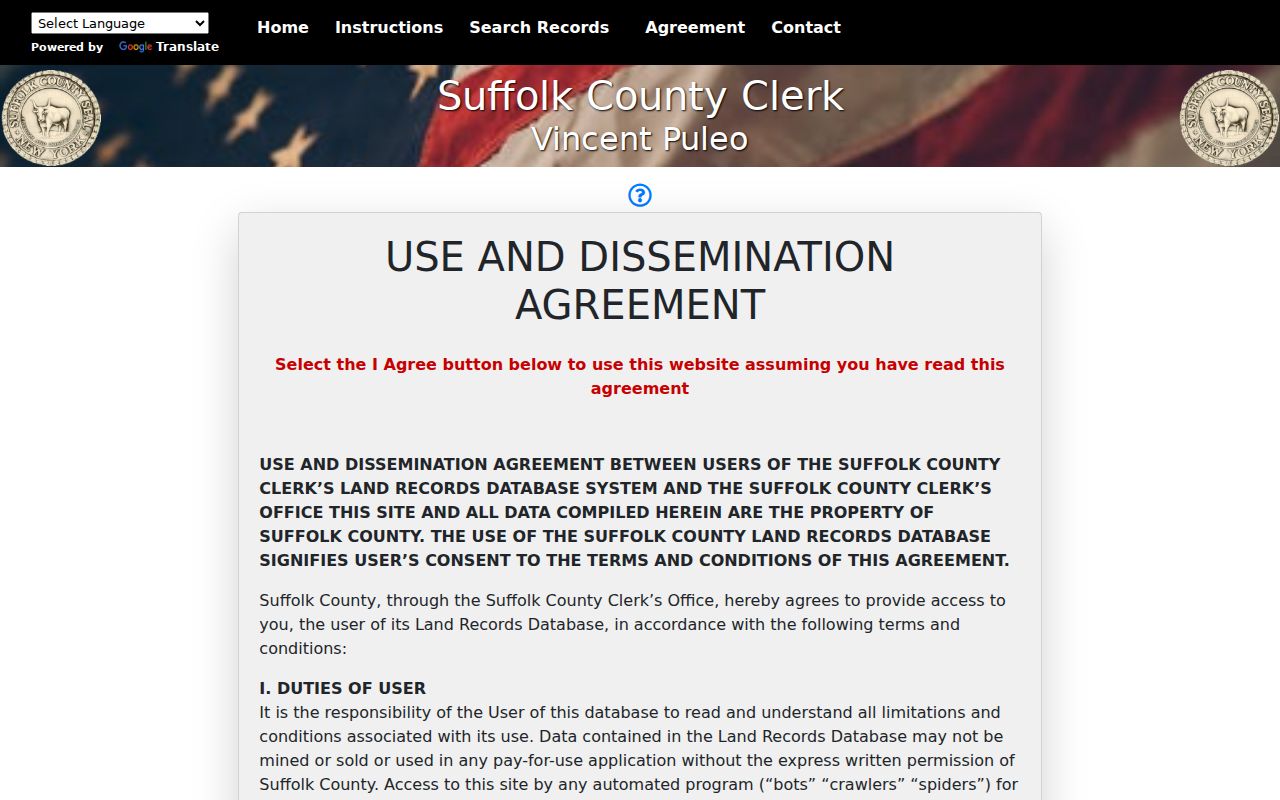
Log the document type, recording date, parties, Liber/Page, and prior-reference field. A name match alone never carries the chain.
Brookhaven Previous Residents Deed Chain
Start with the Town's tax-map search to capture the physical address, item number, and 19-digit Suffolk Tax Map number, known as the SCTM. The owner or mailing field is a useful lead. It is not proof anyone lived there. Then find the current title holder's recorded purchase in the Clerk's index, and use the seller's name plus the prior Liber/Page to keep moving back. Remember the distinction. This is a chain of title, not a chain of residents.
- Save the street address as printed, the SCTM or item number, and the parcel's legal description when available.
- Locate the current or most recent recorded deed with the Clerk's address, tax-map, name, or Liber/Page route.
- Read the deed for the prior recording reference and record the grantor and grantee with its date.
- Search the seller from that deed as a grantee to identify the earlier purchase, then repeat the same comparison.
- When the date crosses the online range, continue through the public terminals or older grantor and grantee books.
- Grantor
- The party transferring an interest in a recorded deed.
- Grantee
- The party receiving that recorded interest. A grantee is an ownership clue, not proof of residence.
- Chain of title
- The sequence of recorded transfers connecting a parcel's present and earlier title records.
- Legal description
- The parcel description in the record, which can remain useful when old street labels differ from modern ones.
The Clerk's search instructions walk through the current-deed and prior-Liber/Page route step by step. The chain holds up best when every link is saved with the document's own date and reference.
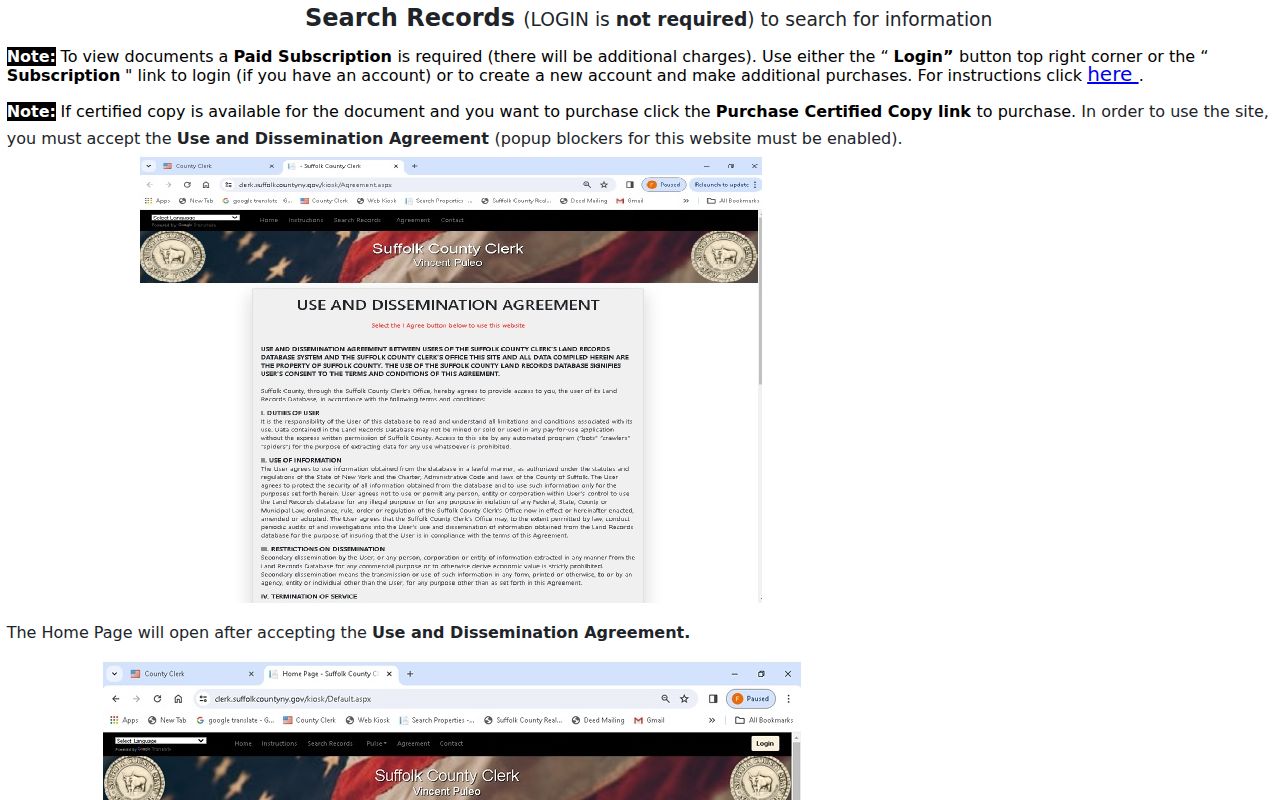
A prior reference is a research direction, not proof about the household that occupied the property.
Brookhaven Previous Residents Before 1969
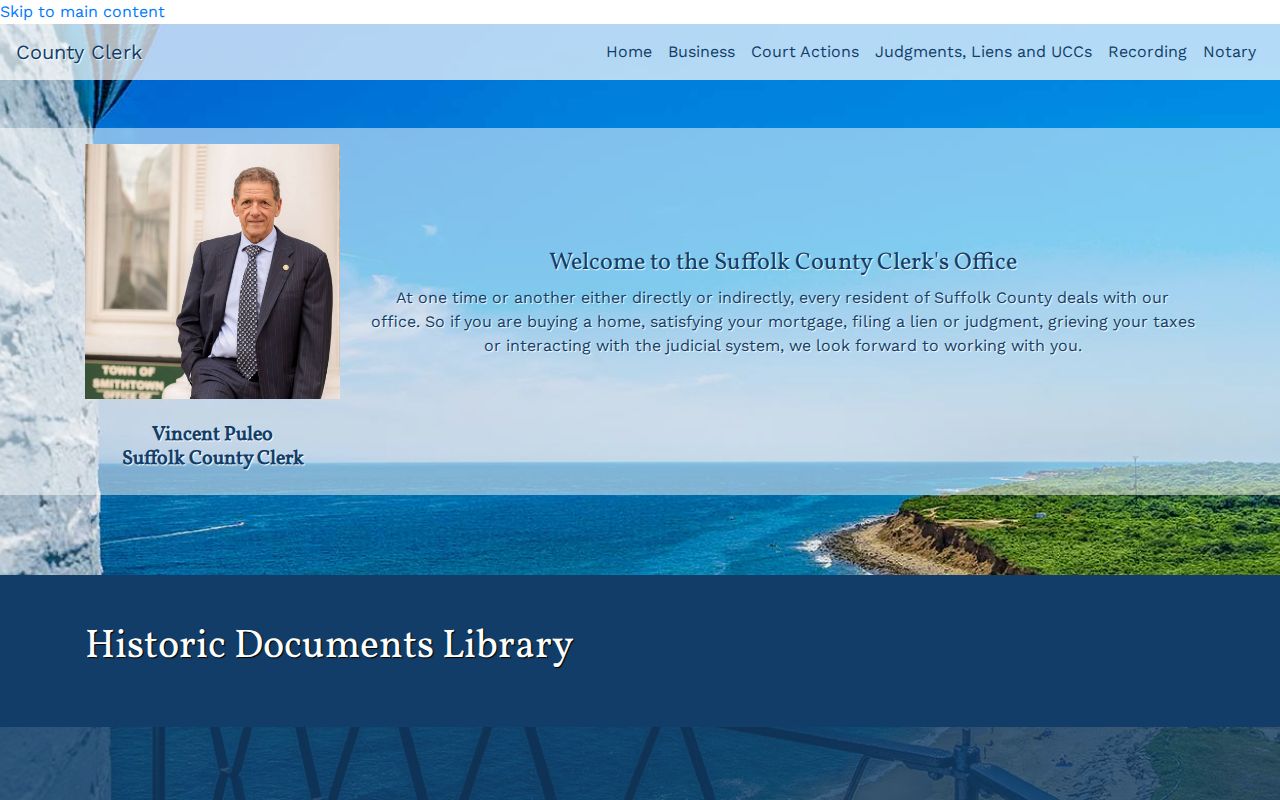
Title work that reaches back past 1969 takes a different path at the County Clerk. The Historic Documents Library holds the older material. Its land records stretch back to the mid-1600s. Public terminals only cover 1969 forward. Anything earlier lives in the grantor and grantee books, and both directions matter. A past owner who sold the parcel shows up as a grantor. The same person appears as a grantee in the deed that first brought the property into their hands. The reverse search can also surface a later transfer the forward trail missed.
Visitors get in Monday through Friday, 9:00 a.m. to 5:00 p.m. Staff stop pulling records at 4:15 p.m., and all work must wrap up by 4:45 p.m. Bring photo identification. The library sits in Riverhead, and the phone number is 631-852-2000. Mortgage Libers offer one more clue for dating a house. Set beside permits and aerial evidence, they can hint at a construction period. A mortgage date alone never proves when a building was finished, though.
Go in prepared. Pack the deed date and the party names on both sides. Bring the Liber/Page, the SCTM, and any spelling variants for the street or hamlet. Never assume the address kept its old numbering. Never count on a particular Sanborn map existing. A historic book sometimes returns a legal description rather than a modern street line. In that case, work the description against tax maps and GIS before tying it to a current parcel. The County Clerk's historic-research presentation lays out the books and the terminal route for these older records.
Bring the SCTM, address variants, parties, and every known Liber/Page. That lets the in-person search continue without rebuilding the modern chain.
Brookhaven Previous Residents in Household Sources
Titles only take you so far in Brookhaven. The PML Celia M. Hastings Local History Room holds far more. Directories, newspapers, maps and atlases, genealogy materials, cemetery resources, photographs, oral histories, and vertical files all sit in one place. Its 1850 north and south Brookhaven census compilations give a local starting point. The federal census runs 1790 through 1950. For the directory collections themselves, the Brookhaven city directory route covers that ground.
Order the work by date. Start with a property identifier and a deed reference. Then match a directory or telephone source from near that same date, and finish with the closest census available. Newspapers, obituaries, cemetery records, probate, and archival files can test a move, a death, or a family tie. A directory entry may yield an address or telephone clue, but read its scope first. Brookhaven Town has no complete residential-directory run. So a missing listing proves nothing on its own.
Stony Brook Special Collections adds narrower, date-specific pieces. These include a Port Jefferson and north-shore telephone directory, a 1944-45 Brookhaven and Islip school directory, Brookhaven ephemera from 1965-1973, and North and Central Brookhaven guides from 1971-76. None is a universal household list.
Common surnames need extra care. Pair at least two independent details before linking people. A dated address plus a census household, a deed Liber/Page plus a newspaper notice, or a directory entry plus a cemetery record beats a name alone every time. Historical Brookhaven material may sit under Setauket, a hamlet, the Town, or a postal-place label, so the search note should keep every spelling and geographic term used.
Brookhaven Previous Residents and Aerial Clues
Suffolk County Cartography and GIS adds another time layer. County historical imagery reaches back to 1947. Aerial PDFs from 1928-30 are also available. Prints spanning 1960 through 2001 require an appointment. Compare the year a structure first appears against the recorded deed and mortgage dates, and call the result a landscape inference rather than household proof.
Some gaps are real. The Library of Congress text search holds no Brookhaven or Suffolk Town Sanborn sheet, and no Brookhaven house-history guide is published. Town and County GIS, PML, Stony Brook, and local historical societies remain the right follow-up sources. Brookhaven publishes no year-specific street-renumbering list. An apparent address change belongs against the legal description, tax map, plat, GIS, and postal history.
Old imagery shows change, not occupancy. Treat aerial dates as a landscape timeline. Keep the source date, image type, and any appointment-only access note attached to the property record.
Brookhaven Previous Residents and Ownership
Keep the evidence labels honest. A deed supports a recorded transfer. An assessment field can identify an owner or mailing address, an aerial shows physical change, and a dated directory or census can support a household association. Never upgrade any of them silently. A mailing address can differ from the property address, and a legal description can outlast a street-number change.
Lawful use. Use Brookhaven past-resident research for family history, local history, estate work, or personal curiosity about a place. Do not use public records to stalk, harass, or harm anyone.
Note: The strongest result names which source supports ownership, occupancy, mailing, construction, or only a possible connection.
Brookhaven Land Record Recency Check
The County Clerk's 24/7 telephone hotline is built for speed. Call in an exact 19-digit SCTM. It reads back the 15 most recent land entries. That makes it a fast way to spot freshly recorded activity once the SCTM is confirmed. It is not a household record, though. It builds no deed chain. It makes no directory comparison. It cannot say who lived at the address.
For a Brookhaven past residents question, treat the hotline as a triage tool. It points to which Clerk record deserves attention next. The title and household layers still carry the real answer.