
Brookhaven City Directory Collections
The Celia M. Hastings Local History Room at Patchogue-Medford Library is the primary starting point for Brookhaven directory research. Its Long Island and New York reference material includes periodicals, genealogy resources, maps and atlases, postcards and photographs, vertical files, oral histories, and archives. The room serves Suffolk County and all ten towns. It offers reference help, while archival work may call for an appointment. Catalog evidence identifies several useful directory dates, but it does not establish a complete residential run for the Town of Brookhaven.
| Directory or companion collection | Known date | Repository route | Access note |
|---|---|---|---|
| Curtin's Long Island Directory | 1868-69 | PML catalog and Long Island genealogy sources | Verify the physical or digital item before citing an entry |
| Long Island telephone directories | 1909-1913 | PML discovery holdings | Directory scope can extend beyond Brookhaven |
| Olek's Nassau/Suffolk business directory | 1924-25 | PML discovery holdings | Business listings are not a household register |
| Local Long Island directories | 1928 | PML discovery holdings | Check the named community and publisher |
| Brookhaven census compilations | 1850, north and south | PML genealogy collection | A local companion to broader census work |
These dates are entry points, not an implied annual sequence. The PML catalog also identifies Brookhaven town-record volumes, cemetery material, local histories, and vertical files that can help distinguish two people with the same name.
Brookhaven City Directory Shelf at PML
Directories become more useful when they are read beside the records of the Town itself. PML links full text for Records of the Town of Brookhaven, 1798-1856 and Trustees of the Town of Brookhaven, 1901-1911. Its catalog also identifies Book A for 1657-1679 and 1790-1798, Volume I for 1662-1679, Book B for 1679-1756, Book C for 1687-1789, documents from 1693-1947, and later town records through 1911. Those volumes do not replace a city directory, but they can place a name, place, or transaction in the right era.
PML's cemetery book is arranged by name, and its 1850 north and south Brookhaven census compilations offer another local bridge. Local histories for East Patchogue, Medford, Coram, and Middle Island, plus vertical files, may supply place-specific context. Search the library catalog under both a current locality and a historical name. The geographic cutter guide uses T-BROO for the Town of Brookhaven and V-BRKHV for the Village of Brookhaven.
PML also identifies newspaper research routes that can test a directory clue. Suffolk Historic Newspapers spans 1821 through 2007 in the catalog listing; the Brooklyn Daily Eagle route spans 1841-1955, and the New York Times historical route begins in 1851. Newsday historical and current library searching is also identified. Search a printed name, street, business advertisement, civic event, obituary, or property notice only within the source's stated date range. A clipped notice should retain its newspaper title, date, and page beside the directory citation.
Note: A catalog record confirms a research lead, but the item itself should be checked for its date, geographic scope, and indexing method.
Reading Brookhaven City Directory Clues
No proper local occupant-entry scan was captured in the reviewed sources. That gap matters. A researcher should inventory only the fields actually printed in a consulted volume, then preserve the page, publisher, year, and stated geographic scope. A Long Island directory can describe the Town or its villages without placing a particular household in a listing. The digitized Long Island Directory PDF, for example, gives historical Town and village context on pages 39-40 rather than a verified household entry.
| Printed name | Record initials, spelling, surname order, and any qualifier exactly as shown. |
|---|---|
| Street or hamlet | Keep the original address or locality, including a village or postal-place label. |
| Telephone | Capture it only if the consulted entry prints one, and keep the directory year beside it. |
| Household wording | Note a spouse, household qualifier, owner notation, or widow notation only when printed. |
| Citation details | Save the page, publisher, edition year, and the directory's stated coverage. |
- Criss-cross directory
- A directory arranged by address or street rather than by surname, useful when the volume includes that section.
- Householder index
- An index that points to a household head or listed address. It does not establish every person at that location.
- Abbreviation key
- The volume's explanation of its shortened terms and symbols. Photograph or transcribe it before interpreting marks.
Brookhaven City Directories Beyond PML
Stony Brook University Special Collections adds a distinct group of local ephemera. Its holdings include a Port Jefferson and north-shore telephone directory, a 1944-45 Brookhaven and Islip school directory, Brookhaven ephemera from 1965-1973, the Home Owners Guide for North and Central Brookhaven from 1971-76, a March 1979 Suffolk County government telephone directory, and a 1985 Brookhaven National Laboratory directory. It also holds maps, atlases, yearbooks, and local deed collections.
These sources have different audiences and boundaries. A school directory, institutional directory, telephone book, or guide for a part of the Town cannot be treated as a full Town residential list. Still, each can supply a spelling, association, address clue, or date to test against a census, deed, cemetery register, or newspaper. Capture the document type before drawing a conclusion from an entry.
Stony Brook's local collections also list family land deeds and documents from Miller Place and Rocky Point dated 1705-1967, Brookhaven Town land deeds around 1780-1929, digitized documents, and yearbooks from 1961-2006. These materials can help locate a place in a time period, especially when a directory uses a north-shore community name rather than a broad Town label. They should be cited as their own source type, separate from any city directory listing.
Tracing Brookhaven City Directory Households
For a family-history trail, start with the exact locality printed in the source. A directory may use Brookhaven, Setauket, Patchogue, Port Jefferson, or another community label. Work outward from the first reliable appearance and keep a separate note for each year. Federal census records from 1790 through 1950 are public under the 72-year rule, and the 1950 census was released in 2022, according to the National Archives. Census fields provide historical household context, not a list of current residents.
- Find the person or place in a dated directory, and copy the page, publisher, locality, and nearby entries.
- Compare the nearest earlier and later available directories for spelling changes, moves, or a changed household qualifier.
- Match the best-supported interval with an available federal census or PML's 1850 north or south compilation.
- Use newspapers, cemetery material, deeds, tax maps, or vertical files to test a move, death, or place association.
- Mark common-name matches as unresolved until at least two independent details agree.
A vanished listing can mean a move, a death, a change in the directory's coverage, or simply that the household was not included. The record trail should retain that uncertainty rather than turning a missing name into a definite event.
Brookhaven City Directory Archive Route
The Suffolk County Historical Society in Riverhead is another county-wide research stop. Founded in 1886, it operates as a museum, library, and archive. The library is open Wednesday through Saturday from 12:30 to 4:30, with appointments strongly recommended and required on Saturdays. Its contact information should be checked before a visit, especially when a particular directory or archival item is needed.
The Historical Society's presentation provides a visual reminder that local directory work often leads to an archive shelf rather than a single online search.
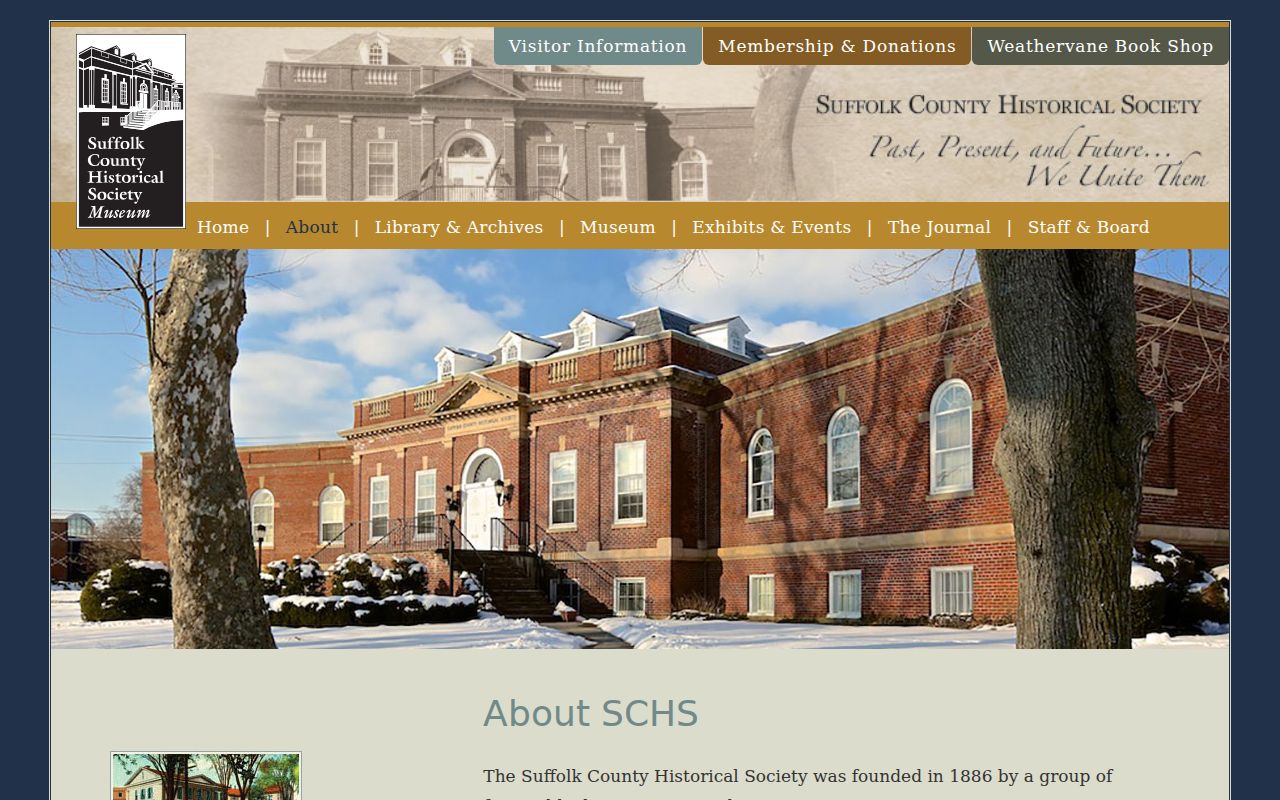
Its Riverhead collections can complement PML and Stony Brook research when a Brookhaven city directory date or locality needs confirmation.
Brookhaven Records Story at Town Hall
Brookhaven's own record history reaches well beyond printed directories. Town Hall displays a copy of the April 14, 1655 deed and the Town patent. The historical display also includes a 1955 mural by Mount Sinai artist Robert Zoeller. The mural was installed in a former Patchogue Town Hall, then moved, conserved, and reinstalled. In 1977, the date on the Town seal was corrected from 1686 to 1655. The Town's history account documents those details.
That history explains why a search may surface Setauket, Brookhaven, a hamlet, or a village label. The name on a historical record belongs to the date and record keeper, so it should not be silently converted to a modern postal label.
Limits of Brookhaven City Directory Evidence
No official source reviewed established a first or last complete printed Brookhaven residential directory year. No complete Town run or actual local occupant entry was retained in the research. The Library of Congress text search also did not identify a Brookhaven or Suffolk Town Sanborn sheet. Those absences are useful findings, not invitations to fill gaps with assumptions. PML, Stony Brook, the Suffolk County Historical Society, and local historical societies are the appropriate places to ask about an unlisted item or a possible map.
The New York Genealogical and Biographical Society's Suffolk guide corroborates useful discovery leads, including Curtin's 1868-69 volume, 1909-1913 telephone directories, 1928 North Shore directories, church and probate material, and Brookhaven epitaphs. It is a route to investigate, not a substitute for inspecting the repository's item. FamilySearch collection names and a complete church or parish register inventory were not verified in the reviewed material, so those sources need direct catalog confirmation.
A historical listing can support a date-specific connection to a place. It cannot by itself prove current residence, full household membership, ownership, or a modern identity. Use the record for family history, local history, or an estate trail, and never use a directory finding to stalk, harass, or harm anyone.
Note: Preserve the repository, page, date, and source type with every finding so another researcher can evaluate the same evidence.